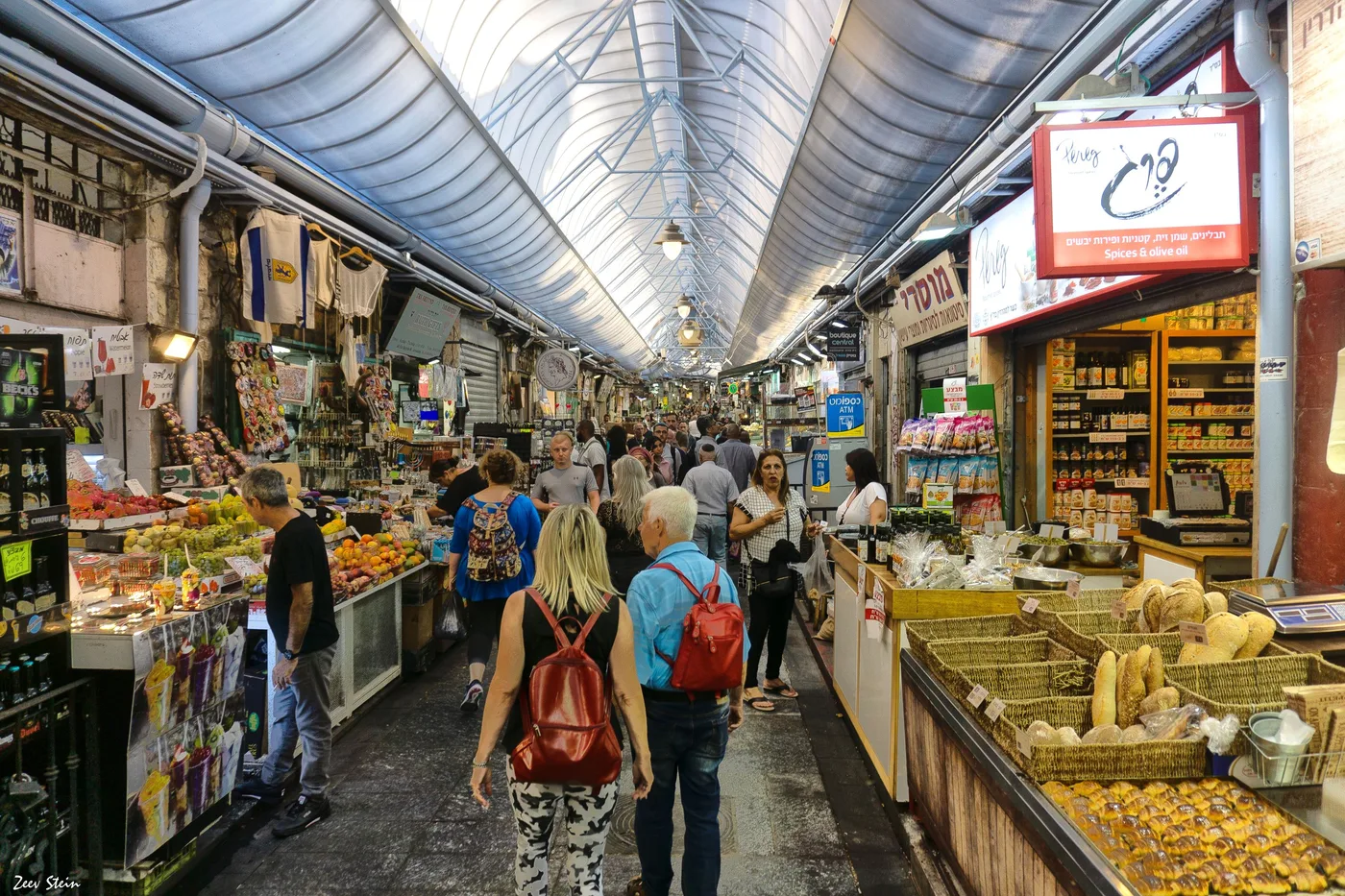
Most visitors assume the shuk has always looked and sounded exactly like this. It's really only worn this shape for about a century, and its story starts somewhere else entirely.
Here's the part I like telling guests as we walk in: the market didn't come first. The neighbourhood did.
A neighbourhood, not yet a market
In 1887, a small consortium, Swiss banker Johannes Frutiger and his partners Joseph Navon and Shalom Konstrum, built a new neighbourhood just north of Jaffa Road. They named it Mahane Yehuda, after Navon's brother Yehuda, who had died young. At this point there was no market here at all. Just houses, built for families ready to live outside the Old City walls.
Shuk Beit Ya'akov: the market's real first name
The market itself began separately, on an empty lot across the road, owned by the Sephardi Valero family, near another new neighbourhood called Beit Ya'akov. Farmers and merchants started selling produce there to the growing population outside the walls, and for a while it was known as Shuk Beit Ya'akov, not Mahane Yehuda at all.
Ottoman chaos, British order
Under Ottoman rule, the market grew the way a lot of things in this city did back then: fast, and without much planning. Stalls, tents and pavilions multiplied, and sanitary conditions grew genuinely bad. It took the British Mandate authorities, in the late 1920s, to clear the site and build permanent stalls with proper roofing. It's around this point that the market finally took on the name we use today, Mahane Yehuda, borrowed from the neighbourhood it had grown up alongside. In 1931, twenty traders who'd only ever had temporary wooden stalls built a new western section, which is still known locally as the Iraqi market.
From produce market to Jerusalem's evening scene
After 1948, the shuk kept doing what it had always done best: feeding the city, stall by stall, reflecting the Ashkenazi, Sephardi and Mizrahi communities who shopped and worked there. The layer most visitors know it for today, the bars, the late-night food, the music spilling out of small kitchens, is a genuinely recent addition, arriving mostly in the last couple of decades. The produce stalls that started it all are still there underneath all of it, doing the same job they've done since the 1920s.
If you're curious how the market changes depending on when you walk in, my guide to the best time to visit Mahane Yehuda covers that in more depth, and my guide to touring the market with someone who knows it covers the other side of that question.
Let's walk the shuk with its story attached.
I'll take you through the stalls, and the century behind them.
See the Mahane Yehuda tour
Written by Orit Kropp
Licensed by the Israeli Ministry of Tourism, Jerusalem-based, and endlessly enthusiastic about bringing the Tanach to life on the ground where it happened.