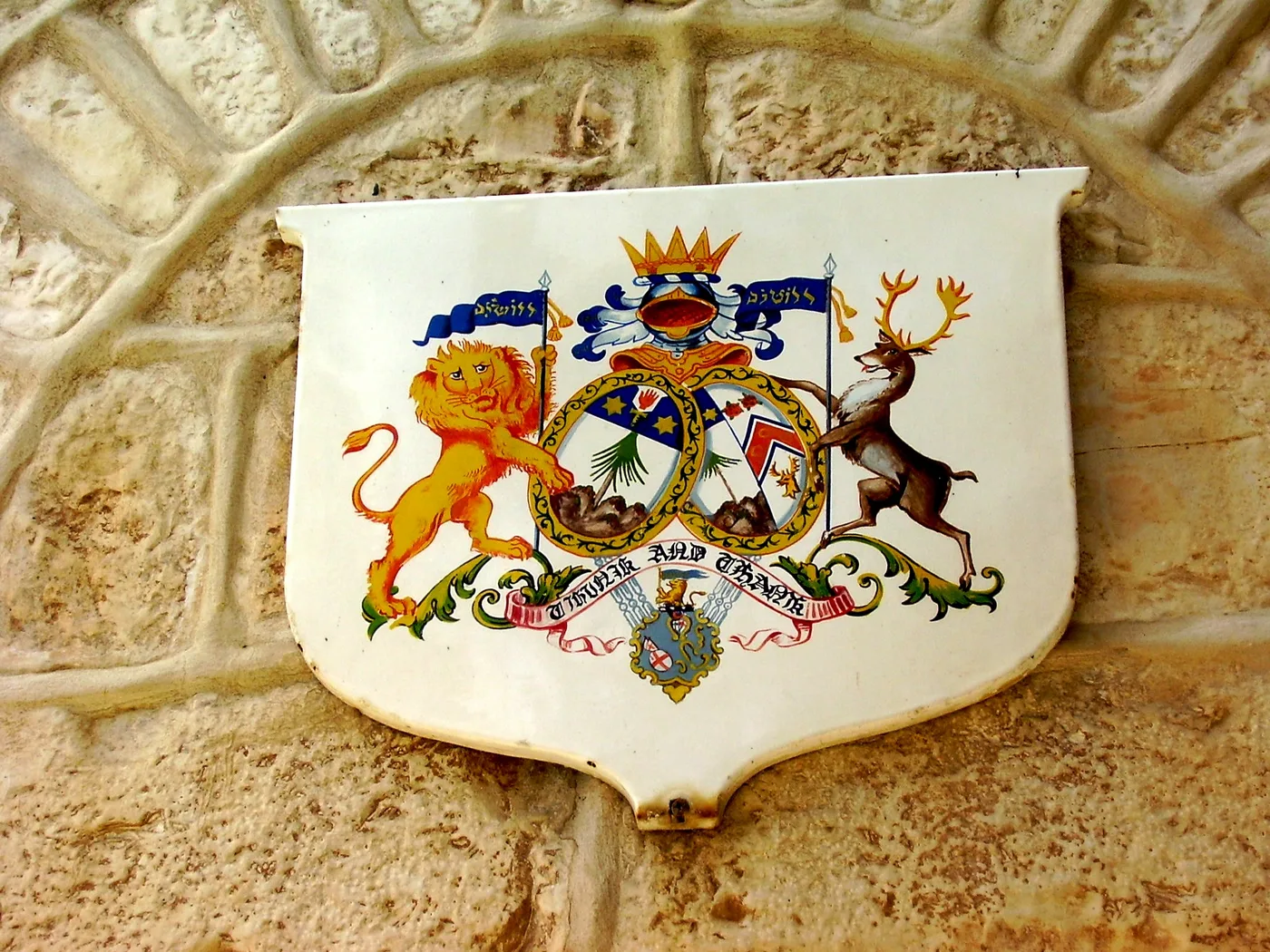
Most visitors see the Montefiore Windmill and the First Station from a car window, on the way to somewhere else. Here's why I'd always rather stop.
Both sit just beyond the Old City walls, both get photographed constantly, and both get properly visited far less often than they deserve. Treated as two separate curiosities, they're pleasant enough. Treated as one story, they're something better: a real thread connecting two men who each tried, a few decades apart, to drag Jerusalem beyond its own walls.
A windmill built to fail
Moses Montefiore built the windmill in 1857, on the slope directly opposite the Old City walls, to grind flour for the small Jewish community he'd just persuaded to live in Mishkenot Sha'ananim, the first neighbourhood built outside the walls. It was, by most accounts, a slightly stubborn idea from the start: the site simply doesn't catch enough wind, and the mill never really worked as intended. It stopped milling flour for good by the 1890s.
None of that stopped it becoming one of Jerusalem's most recognisable landmarks. It was restored in 2012 with new sails, and today the base houses a small museum on Montefiore's life alongside a wine-tasting room, with the windmill itself still able to turn in the wind on the right day.
The railway Montefiore wanted, and didn't get
Here's the detail most visitors never hear: Montefiore spent years lobbying for a railway to Jerusalem, and never got one built in his lifetime. The political and financial backing simply wasn't there yet. It took another few decades, and a different visionary, Joseph Navon, to actually deliver it.
Navon, incidentally, is a name that comes up twice in Jerusalem's story beyond the walls. He's also one of the three founders of the Mahane Yehuda neighbourhood that would eventually give the shuk its name. In 1892, his railway from Jaffa finally reached Jerusalem, terminating at what's now known as the First Station: the city's oldest station building, a working terminus for over a century until it closed in 1998. After years of neglect, it reopened in 2013 as a pedestrian promenade of restaurants, markets and events, tracks and all.
Why I build them into one afternoon, not two separate stops
Both sit in the same corridor just beyond the walls, an easy, mostly flat walk that also takes in Yemin Moshe and the German Colony. Rushed past separately, they're a nice photo each. Walked properly, in order, they turn into something closer to a story: two attempts, a generation apart, to build a Jerusalem that existed beyond its ancient walls, one that failed quietly and one that changed the city for good.
It's exactly the kind of afternoon my Beyond the Walls tour is built around. If you'd rather see how this fits alongside other routes away from the classic Old City circuit, my guide to alternative tours of Jerusalem covers that angle too.
Let's walk beyond the walls, properly.
Tell me how much time you've got, and I'll build the route around Montefiore, the First Station, and everything worth stopping for in between.
Get in touch
Written by Orit Kropp
Licensed by the Israeli Ministry of Tourism, Jerusalem-based, and endlessly enthusiastic about bringing the Tanach to life on the ground where it happened.