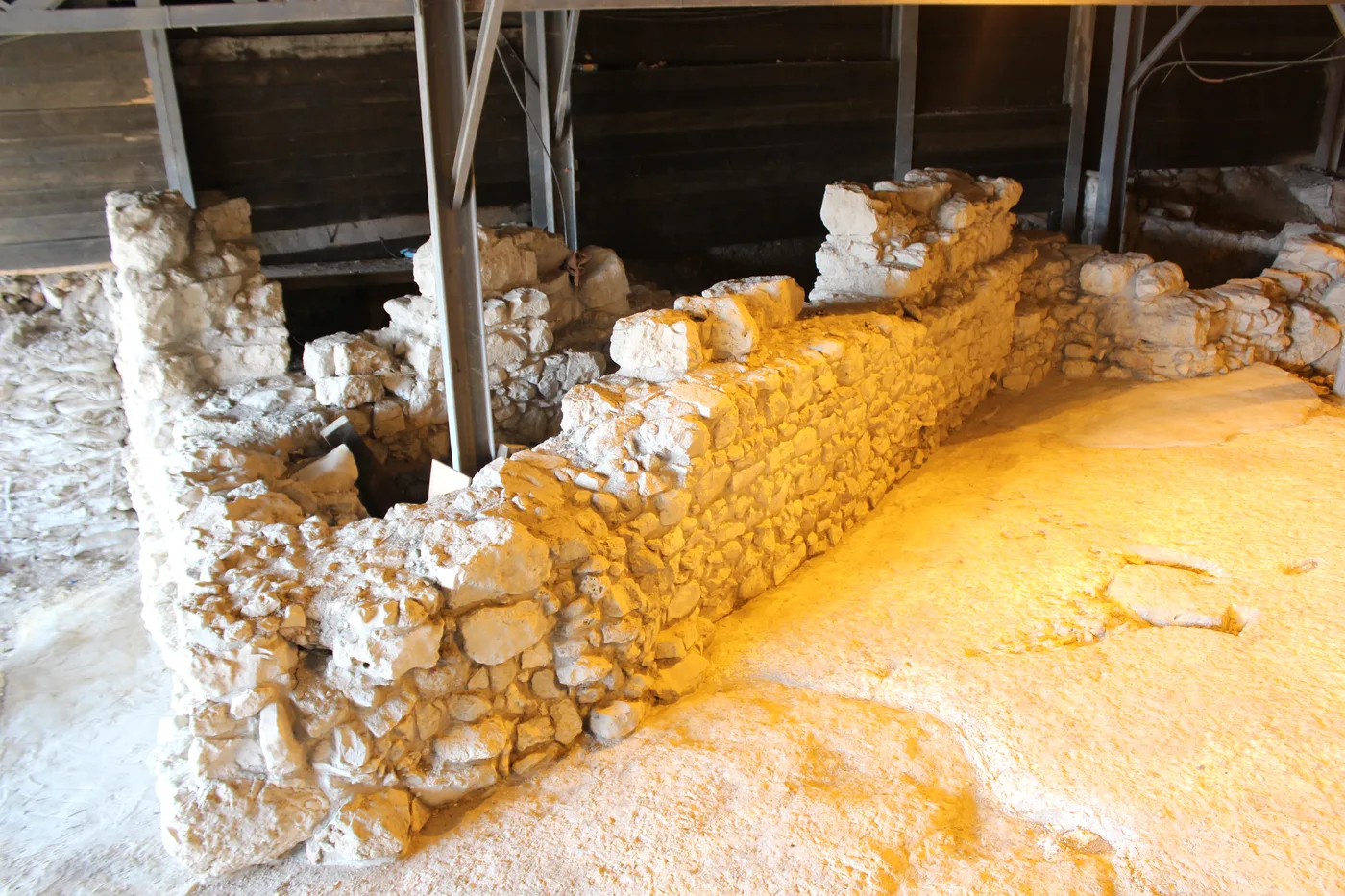
The City of David gets visited for its tunnels and its views. Here are five smaller finds that quietly reshaped how scholars, and guides like me, actually talk about this place.
Some archaeological finds change a headline for a season. A handful change the way a site gets talked about for good. These five, all found within a few hundred metres of each other, are the ones I keep coming back to.
1. The bulla of Gemaryahu ben Shaphan
In 1982, archaeologist Yigal Shiloh's team uncovered a burnt archive room containing over fifty clay bullae, small seal impressions once attached to official documents. Among them was one reading "Belonging to Gemaryahu, son of Shaphan." Gemariah son of Shaphan the scribe appears by name in Jeremiah 36:10, and the dating lines up precisely with the period the text describes. It's the single find I anchor the most tours around, because it ties a named biblical figure directly to a specific room, in a specific destruction layer, in this specific city.
2. The bullae of Gedaliah ben Pashhur and Jehucal ben Shelemiah
Found a few years apart, in 2005 and 2007, by archaeologist Eilat Mazar, these two seal impressions belong to officials named in Jeremiah 38:1 as men who wanted the prophet executed. They turned up close together, near a structure some archaeologists have proposed identifying as King David's palace, a claim that remains genuinely debated rather than settled. Whatever the building turns out to be, the bullae themselves are a striking match to two very minor, very specific characters from the biblical narrative.
3. The bulla of Azariah, son of Hilkiah
Also from Shiloh's 1982 excavation, found along the Stepped Stone Structure at the City of David's northeastern edge, this seal names a son of Hilkiah, the high priest who served under King Josiah. It's a quieter find than the others, but it fits the same pattern: an administrative seal, from the right period, naming a family that the biblical text already told us mattered.
4. Warren's Shaft and the Gihon Spring
Long before any of the above, this city's entire reason for existing came down to one spring. The Gihon Spring's water system, including the shaft named after 19th-century explorer Charles Warren, represents an extraordinary feat of ancient engineering built to secure water access from inside the city walls. Exactly how and when different parts of the system were used is still debated among archaeologists, and I'd treat any confident date you hear on a tour with a little caution. What isn't in doubt is how central this spring was to why Jerusalem sits precisely where it does.
5. The Pool of Siloam
Discovered in 2004 during routine sewage repairs, the Pool of Siloam dates to the Second Temple period and was a major pilgrimage site, the pool associated with the healing narrative in John 9. Excavation of the site has continued in stages since, and it's one of the more dramatic examples of how much of ancient Jerusalem is still, quite literally, under the next pavement.
None of these finds work as well read off a plaque as they do standing in the actual room, or shaft, or pool, where they turned up. That's really the whole argument for a guide here: context is most of the story.
If you're still deciding whether the site's worth your time at all, my City of David: Is It Worth Visiting? post answers that directly.
Let's walk through where these finds actually turned up.
I'll take you to the rooms and structures behind each one, not just the display case.
See the Old City tour
Written by Orit Kropp
Licensed by the Israeli Ministry of Tourism, Jerusalem-based, and endlessly enthusiastic about bringing the Tanach to life on the ground where it happened.